> For the complete documentation index, see [llms.txt](https://docs.ox.security/llms.txt). Markdown versions of documentation pages are available by appending `.md` to page URLs; this page is available as [Markdown](https://docs.ox.security/ticketing-and-messaging/ticket-management/jira/adding-jira-tickets.md).
# Adding Jira Tickets
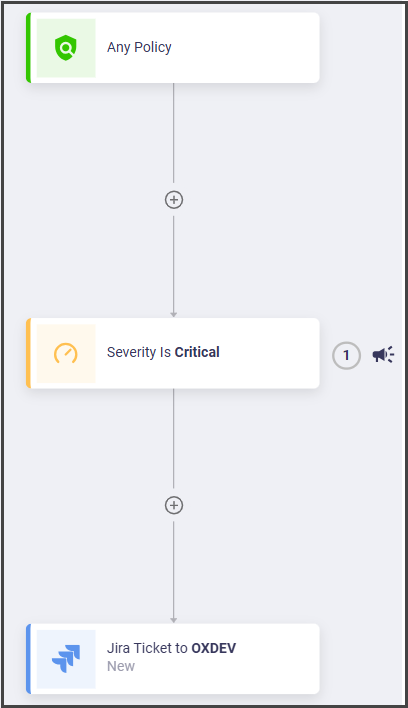
After establishing the [connection with Jira](/ticketing-and-messaging/ticket-management/jira.md), you can add Jira tickets for a variety of tasks and issues, and [add automation to tickets](/ticketing-and-messaging/ticket-management/jira/automating-jira-ticketing-in-ox.md).
You can add Jira tickets in OX using one of the following methods:
* Adding a new ticket to an issue on the Active Issues page, or bulk of issues.
* Adding a new ticket as a scheduled task using workflows.
In addition to creating and updating Jira tickets, you can use workflows to [automatically synchronize Jira ticket status with the status of the associated OX issue](#change-jira-status-to-to-do-if-the-ox-issue-is-active).
## **Add a new Jira ticket in OX**
1. In the Issues page, identify and select the issue for which you want to add a new ticket in Jira.
2. Select the Jira icon.
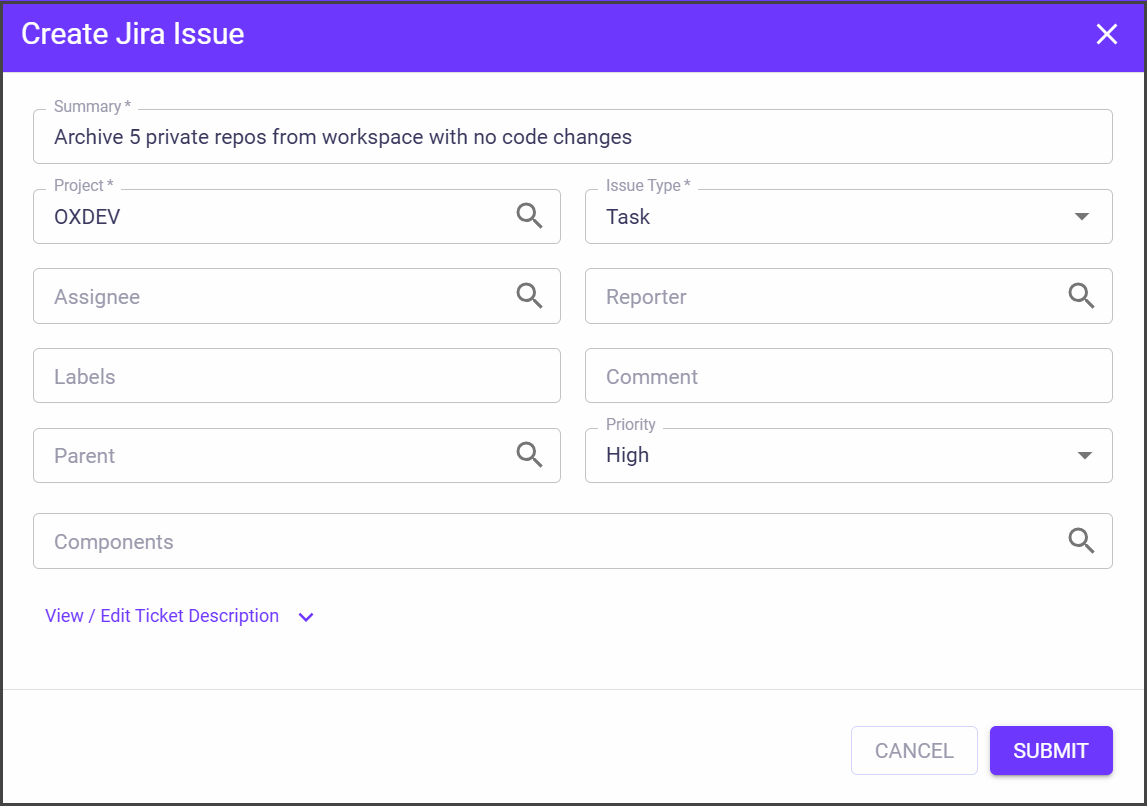
3. Set the ticket mandatory parameters in the **Create Jira Issue** dialog.
| Parameter | Description |
| -------------- | ---------------------------------------------------------------------------------------------- |
| **Summary** | The title of the ticket that describes the problem/issue, as it appears in the OX Issues page. |
| **Project** | The name of the project, as it's defined in Jira. |
| **Issue Type** | Select the issue type. |
4. (Optional)Set the other Jira ticket parameters.
5. Select **SUBMIT**.
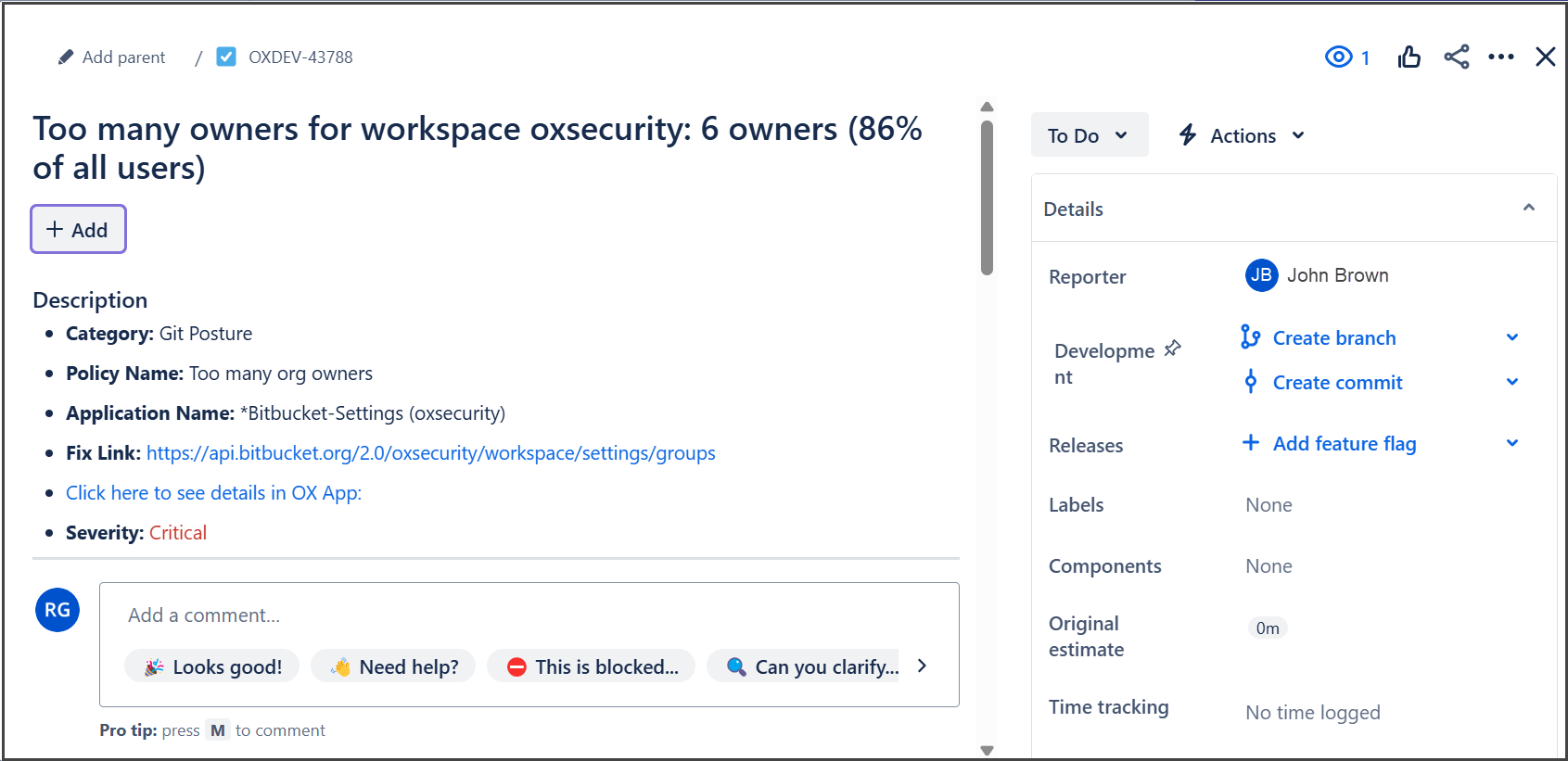
The new ticket appears in Jira.
## Change Jira status to To Do if the OX issue is still active
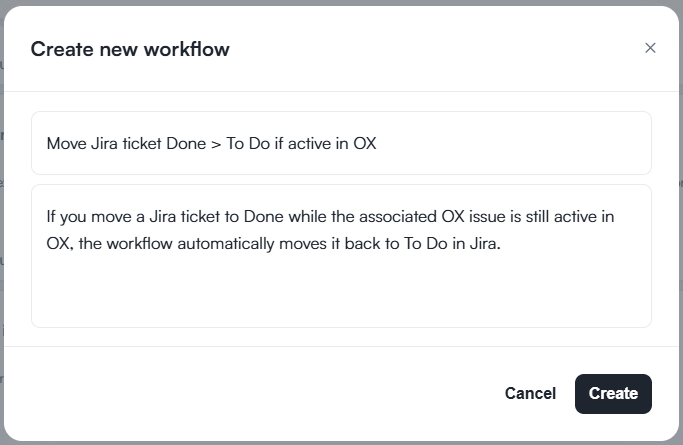
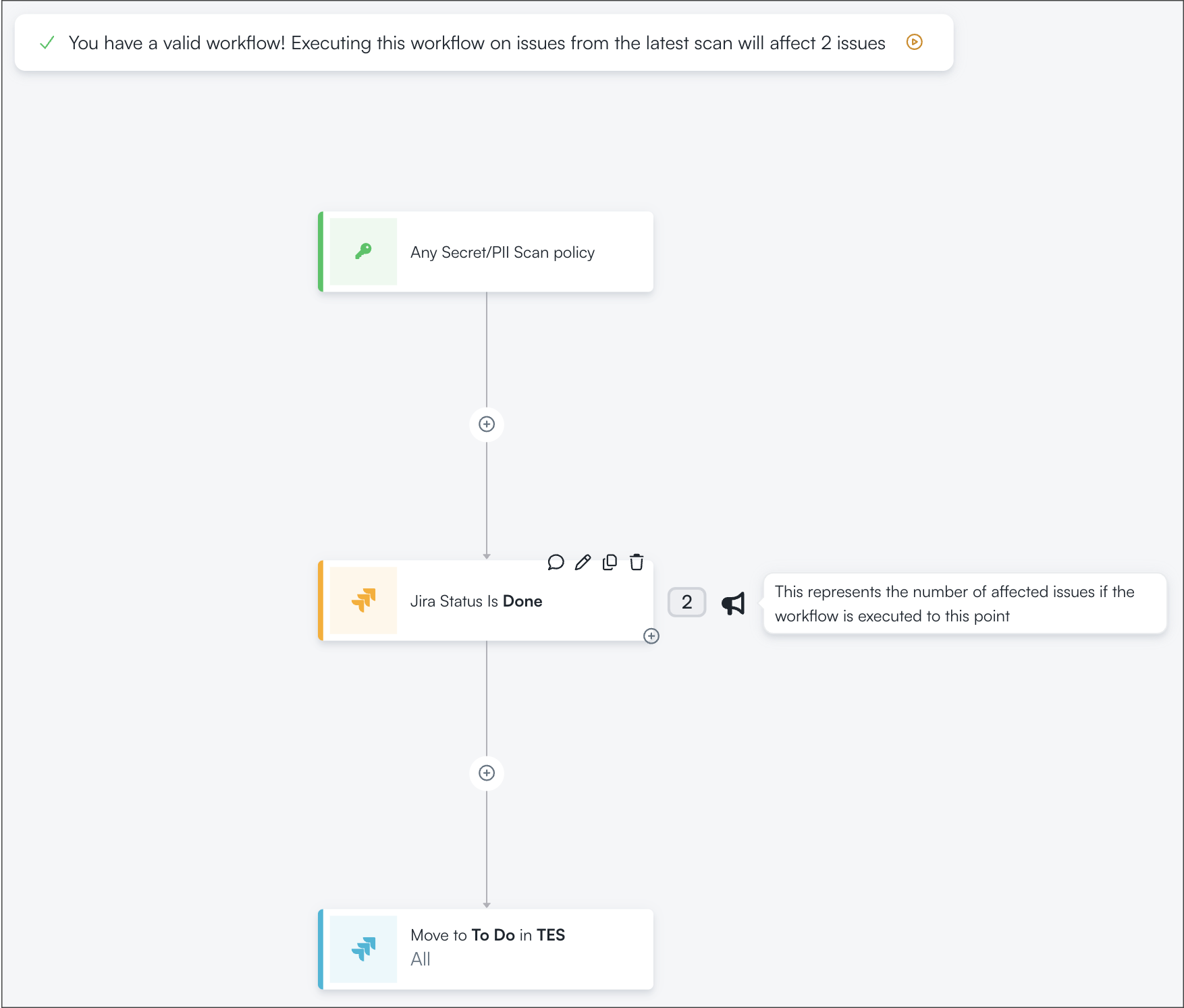
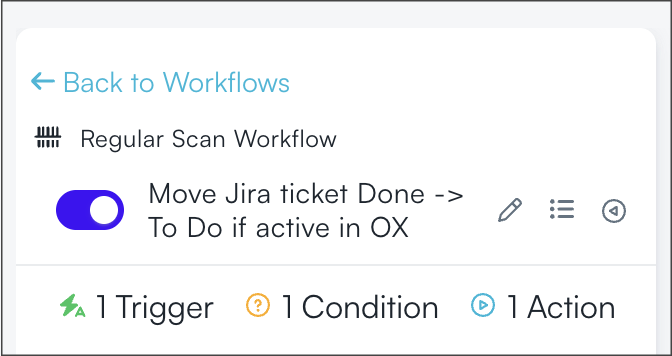
If you move a Jira ticket to **Done** while the associated OX issue is still active in OX, you can use a workflow to automatically move the Jira ticket back to **To Do**.
1. On the **Workflows** page, select **Create New Workflow**.
2. Select **Create**.
3. Select a new trigger.
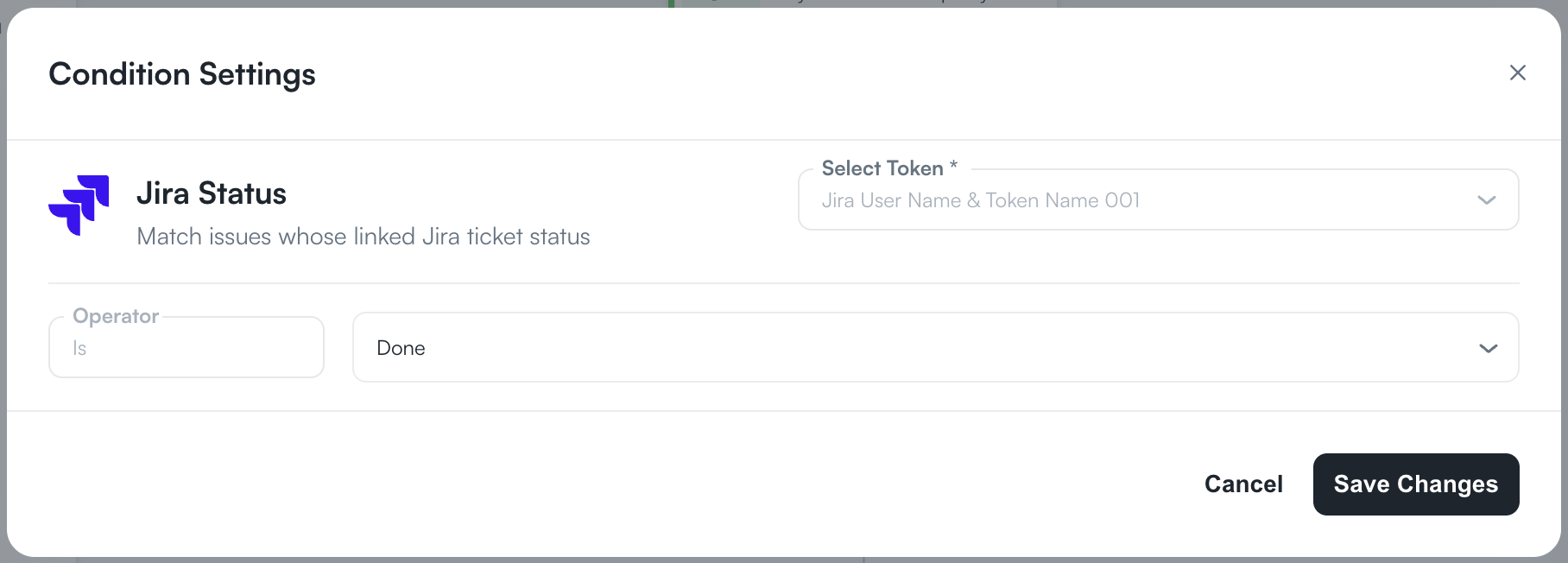
4. Add a **Jira Status** condition.
5. Select the Jira status **Done**.
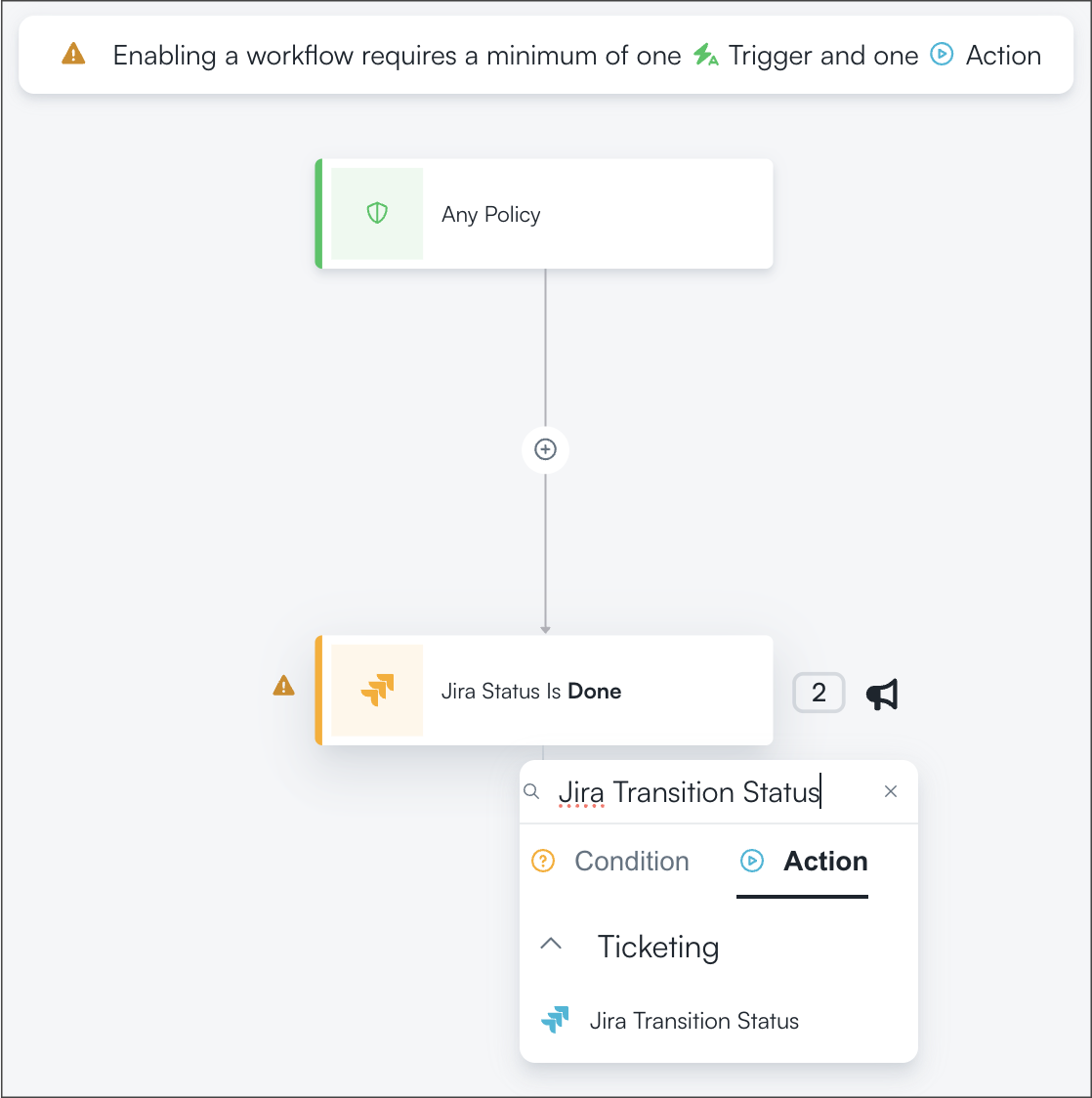
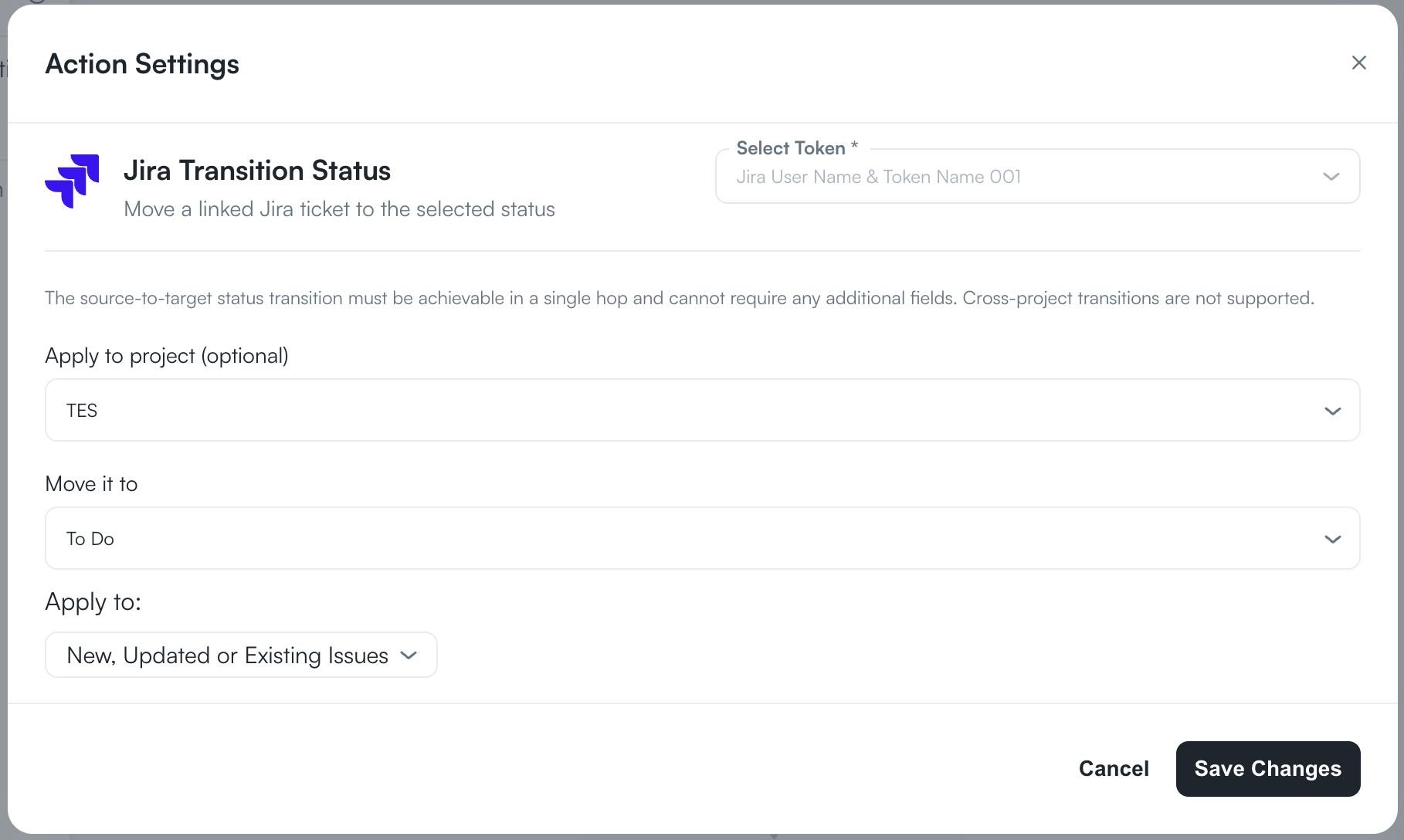
6. Add a **Jira Transition Status** action.
7. Select the target Jira status **To Do**.
8. (Optionally) Select a Jira project to limit the list of available target statuses.
**Notes:**
* The transition must exist in your Jira workflow.
* The transition must be a direct transition between the selected statuses.
* The transition cannot require additional mandatory fields.
* Cross-project transitions are not supported.
9. Select **Save Changes**.
10. Enable the workflow.
11. Run the workflow manually or wait for it to run automatically based on the configured trigger.
The workflow appears in the **Workflows** list.
12. Review the results in **Workflows** > **Execution Logs**.
The execution log shows the workflow status, the number of affected issues, and provides a link to the corresponding **Active Issues**.
---
# Agent Instructions
This documentation is published with GitBook. GitBook is the documentation platform designed so that both humans and AI agents can read, navigate, and reason over technical content effectively. Learn more at gitbook.com.
## Querying This Documentation
If you need additional information that is not directly available in this page, you can query the documentation dynamically by asking a question.
Perform an HTTP GET request on the current page URL with the `ask` query parameter, and the optional `goal` query parameter:
```
GET https://docs.ox.security/ticketing-and-messaging/ticket-management/jira/adding-jira-tickets.md?ask=&goal=
```
`ask` is the immediate question: it should be specific, self-contained, and written in natural language.
`goal` is optional and describes the broader end goal you are ultimately trying to accomplish on behalf of the user. GitBook uses it to tailor the answer towards what is most useful for that goal.
The response will contain a direct answer to the question and relevant excerpts and sources from the documentation.
Use this mechanism when the answer is not explicitly present in the current page, you need clarification or additional context, or you want to retrieve related documentation sections.


.png?alt=media)